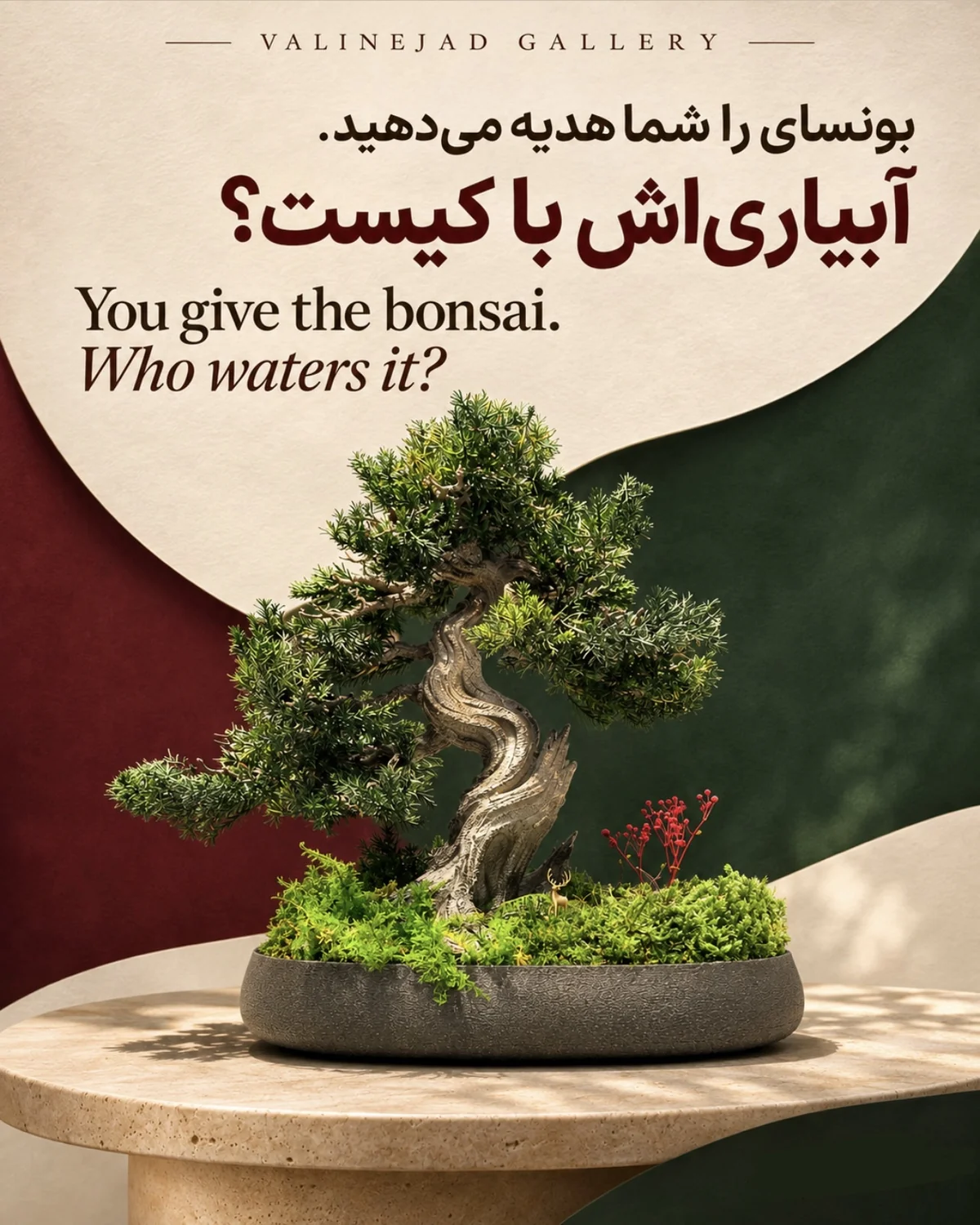
You give the bonsai. Who waters it?
Why bonsai trees lose their leaves, and what to consider before giving one.
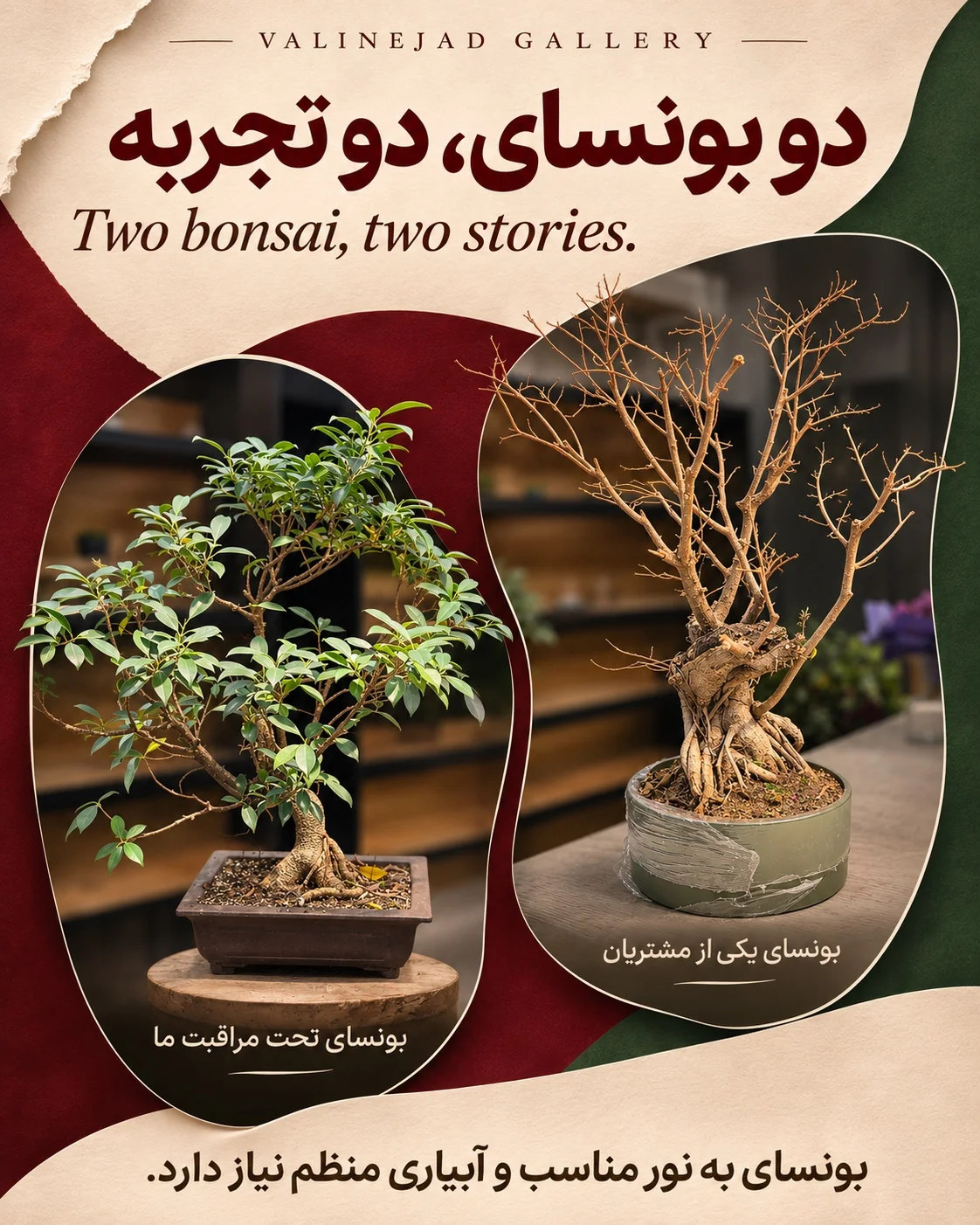
If your bonsai is losing leaves, first identify the species and check soil moisture, drainage and light. The same symptom can have several causes. About six years ago, a customer bought a bonsai from Valinejad Gallery. The tree meant a lot to them, and it was sad to see it lose the greenery it once had. The comparison shows the customer’s tree on the right and a bonsai we still care for indoors at the gallery on the left.
Why is my bonsai losing leaves? Start with the soil
Check the surface and just below it before watering again. If the growing medium stays wet and water collects in the tray, empty the tray, check that the drainage holes are clear and wait until the tree needs water. Roots can suffer when they sit in wet soil for too long. If the medium is dry, water slowly and evenly until water drains from the pot. Empty the tray afterward. A shallow bonsai pot can dry out faster on warm days, so check the soil itself.
What do yellow, dry or fallen green leaves tell you?
Yellow leaves and persistently wet soil are a reason to check drainage and watering frequency. Brittle leaves or brown edges with dry soil point to checking for insufficient water or direct heat. If green leaves fell soon after a move, check for a change in light, cold drafts or direct air from a heater or air conditioner. Inspect leaf undersides and branch joints for spots, webbing or insects. Photos of the foliage, trunk and soil can help a specialist assess the tree.
Can a bonsai with no leaves recover?
Recovery depends on the species, season and extent of the damage. Outdoor deciduous trees such as maples can naturally lose their leaves in autumn. Persistent leaf drop in an indoor ficus or widespread browning in a juniper deserves prompt attention. Identify the species and correct one clear problem at a time. Avoid fertilizing, hard pruning and repotting all at once on a guess. Ask a specialist if the soil smells unpleasant, the trunk base softens or the tree declines quickly.
How often should you water a bonsai?
Watering depends on the species, pot size, growing medium, temperature and season. Ficus can grow in a bright indoor position, while cultivated juniper generally needs outdoor conditions and seasonal changes. If you are travelling or the office is closing for a holiday, ask someone to check the soil and water as needed. Ask the seller for the species name and guidance for that particular tree.
Which bonsai makes a good gift?
For someone who enjoys watching a tree grow and caring for it, choose a cultivated bonsai suited to their space and available light. For a desk, a frequent traveller, an anniversary or a thank-you gift, consider preserved bonsai. At Valinejad Gallery we arrange natural preserved plants branch by branch around a trunk. The finished piece needs no watering, growing light, soil or daily upkeep. Keep it indoors, away from direct sunlight and high humidity.

Before you give a bonsai, think about the days after the box is opened.
Find a bonsai to give
Consider where the piece will sit and the recipient’s taste. Browse the Valinejad Gallery collection to compare preserved bonsai by form, colour and size.