Cascade juniper: from mountain landscape to preserved bonsai
Movement, balance and time, expressed in miniature.
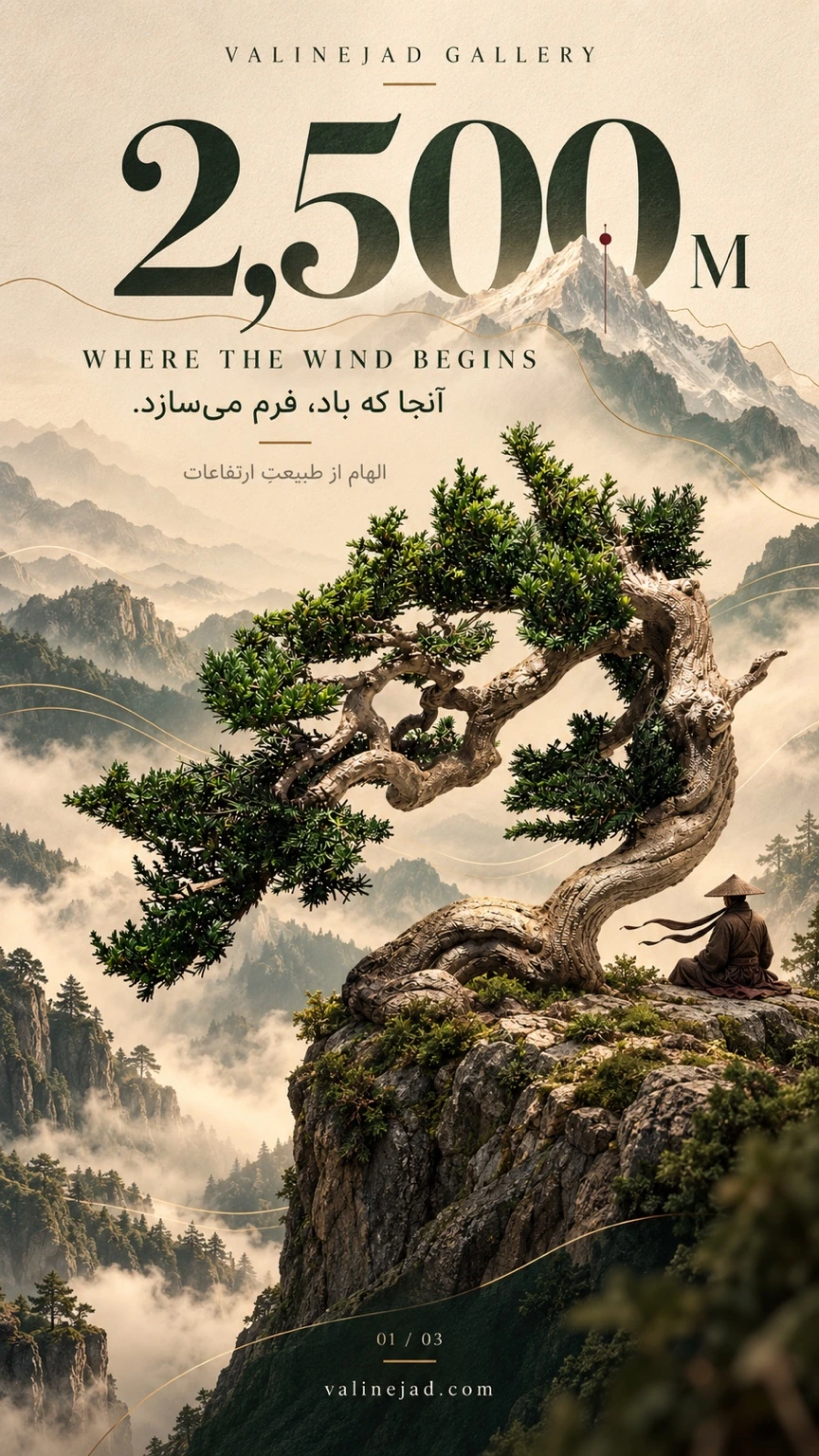
A tree’s appeal can lie in the movement from its trunk to a descending branch. This visual essay follows that idea through an imagined mountain landscape, wind and snow, and a miniature composition for an interior. The images describe artistic inspiration, not the growing location or harvesting history of the product’s botanicals.
The mountain as a visual starting point
Rock, distance and tree establish a sense of movement and endurance in the opening illustration. The 2,500-metre figure belongs to this visual narrative; it is not a verified altitude, age or provenance claim for the product. The relationship between trunk, stone and open space is the design reference. It can suggest a much wider landscape at a small scale.
Wind, snow and the passage of time
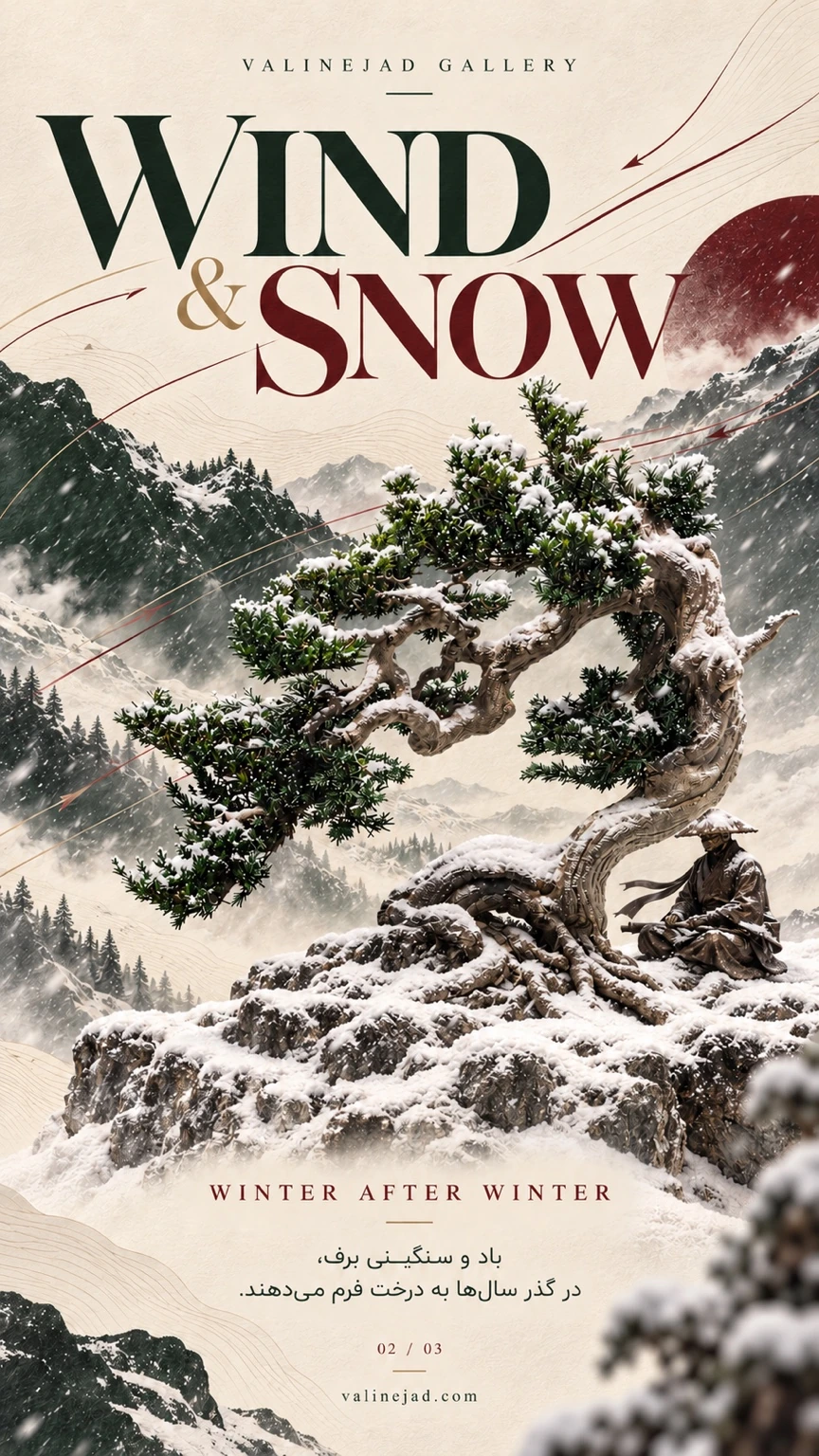
Environmental conditions can influence the growth and shape of trees. Wind and the weight of snow provide visual references for direction and movement in bonsai design. A trunk’s shape alone does not establish its exact history. The winter scene is an artistic illustration of that inspiration. A preserved piece should never be placed in snow, water or outdoor weather to reproduce it.
Reading a cascading form
In classical cascade bonsai, the main line descends; in semi-cascade forms the descent is more limited. Look beyond the label to visual balance: the trunk needs an anchoring presence, while the descending foliage guides the eye. Green Cascade is a descriptive gallery model name, rather than a claim that every decorative composition follows all classical exhibition rules.
From a wide landscape to a small composition
The final scene translates movement into a twisted trunk, green foliage and a moss setting with restrained miniature details. Open spaces between branches allow the trunk to remain visible. More detail is not automatically better: the relationship between elements and the placement of each one create the viewing experience.
Preserved juniper in an interior
The final artwork uses natural preserved botanicals and does not need watering or light for growth. It differs from cultivated juniper bonsai, which has its own environmental requirements. Choose a stable indoor surface away from direct sunlight, water, excessive humidity and direct heat. Check the model’s dimensions and leave room around the branches.
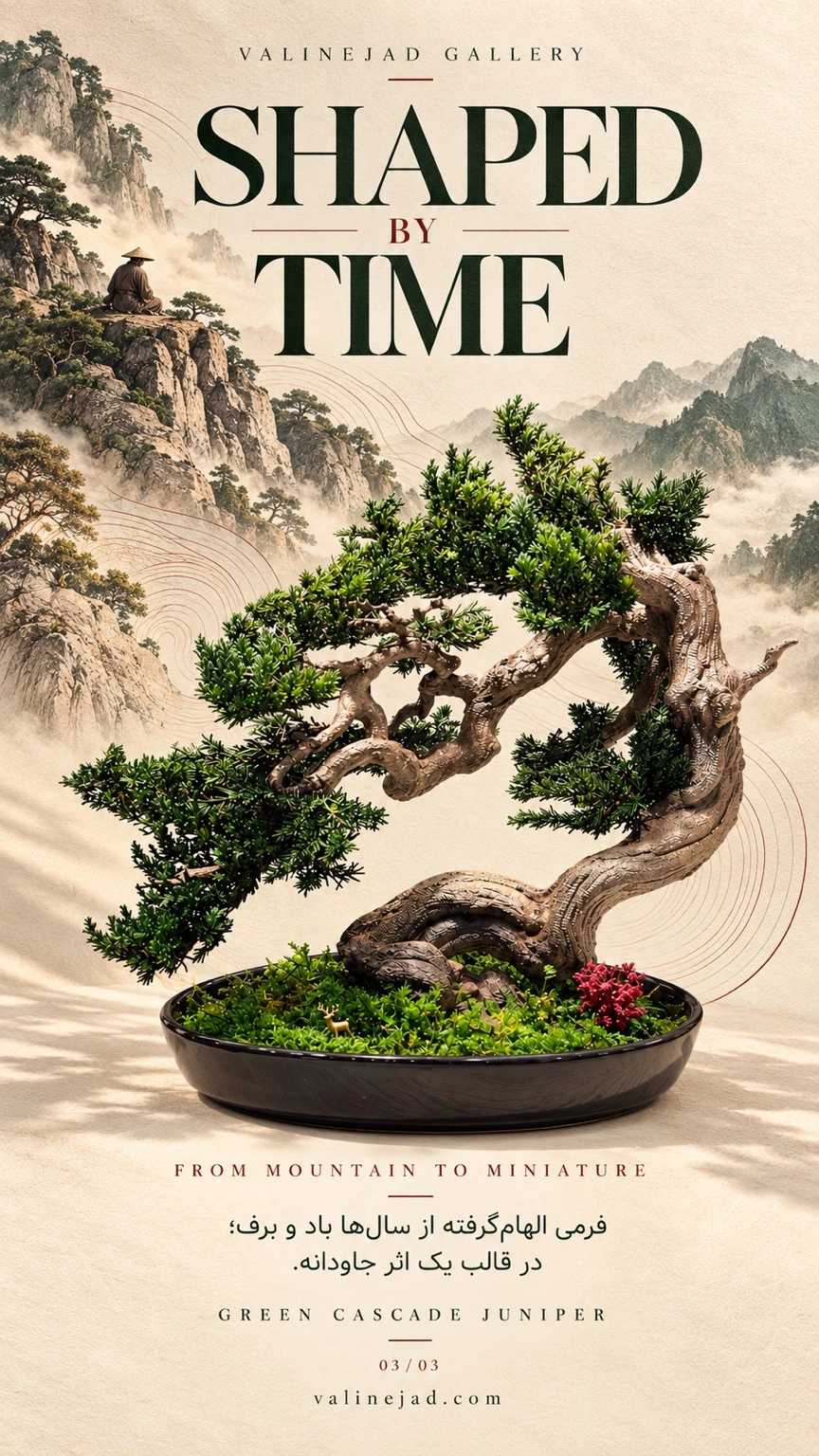
A movement borrowed from nature, composed for everyday contemplation.
Follow the line
Begin at the trunk and follow its movement to the tips of the branches. A cascading composition can bring presence to a modest space when its scale suits the setting. Visit Green Cascade for actual product photographs, measurements and order details.